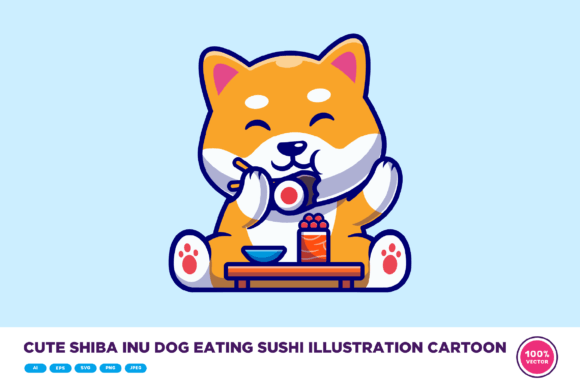
Cute Shiba Inu Dog Eating Sushi Cartoon
First Impressions: Mood, Shape, and Real Project Potential
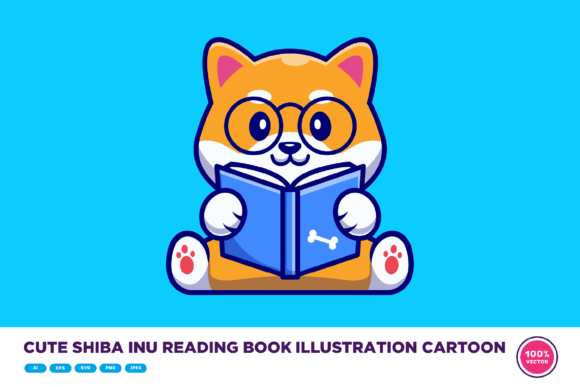
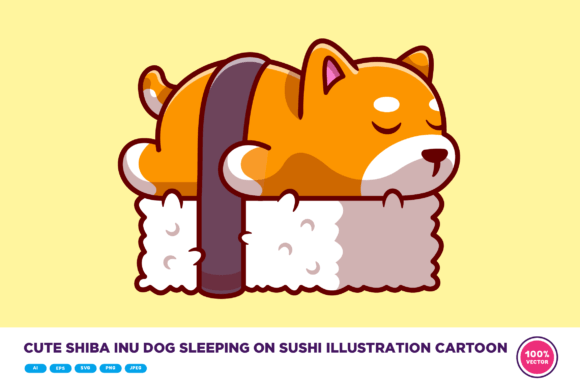
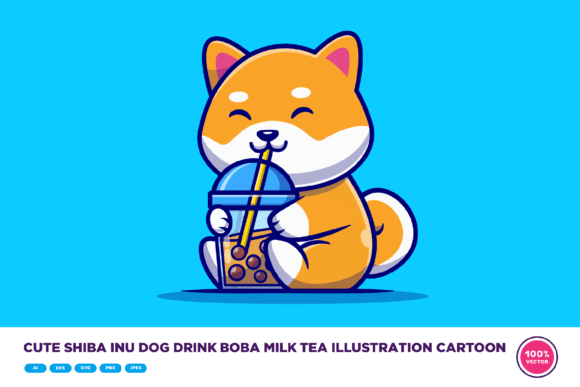
When I first opened the Cute Shiba Inu Dog Eating Sushi Cartoon vector, I immediately saw a design that walks a careful line between playful and polished. The flat cartoon style is clean without feeling overly simplified. The Shiba's expression carries that curious, slightly mischievous personality that fans of the breed instantly recognize, and the sushi detail adds a clear food theme without clutter. For an embroidery project, this kind of balanced composition matters. You get a distinct subject with enough visual interest to hold attention, but not so much fine detail that it becomes a nightmare to stitch out on fabric.
The shape of the design is compact and roughly circular, which makes it a natural candidate for tote bag embroidery, sweatshirt embroidery, or even a centered embroidered patch. There is no awkward negative space pulling the eye away from the main character. The Shiba and the sushi feel connected as a single motif, so when you hoop it, you are working with a unified piece rather than scattered elements. That is exactly what I look for when I am deciding whether a digital embroidery file is worth the time to test and eventually list in my shop.
The overall mood is lighthearted and cute, which immediately makes me think of baby embroidery projects, personalized gifts for dog lovers, or even holiday embroidery for friends who appreciate quirky food art. There is a warmth to the illustration that feels approachable. It is not trying to be high art. It is trying to make someone smile, and that is a powerful thing when you are selling handmade products at a craft fair or on Etsy.
Real Use Case: Building a Custom Embroidered Tote Bag
Let me walk through a real scenario. I had a client request a custom tote bag design for a small dog bakery's staff gifts. They wanted something that represented the shop's playful personality without looking like a cheap sticker. I pulled the Cute Shiba Inu Dog Eating Sushi Cartoon from my design assets folder and started planning the stitch out. Because the illustration is a flat cartoon style, the thread color mapping was straightforward. I used a warm cream for the Shiba's coat, a soft brown for the ears and face markings, and a pale salmon pink for the sushi fish. The contrast between the light fur and the darker pink was strong enough that the details remained readable even from three feet away.
I tested the stitch density on a scrap piece of medium-weight cotton first. This is a step I never skip, no matter how simple a machine embroidery design looks on screen. The fill stitch areas were clean, but I did notice that the smallest detail, the Shiba's eye, needed a slight size adjustment to maintain clarity. After enlarging the design by about ten percent in my software, the eye stitched out perfectly as a small satin stitch. That adjustment took two minutes but saved me from stitching a dozen tote bags with a muddy expression. If you are an Etsy seller or a small shop product creator, that kind of pre-testing protects your material costs and your reputation.
The finished tote bags were a hit. The staff loved the playful look, and the client reordered for a second batch to use as customer thank-you gifts. That is the kind of real-world feedback that tells me this embroidery project has legs. It works as both a personalized gift and a commercial embroidery piece.
Where This Design Performs Best in Embroidery
After running this design through several embroidery projects, I have a solid sense of where it shines and where it needs extra care. Let me break down the best use cases based on my actual tests.
- Custom Apparel: The design works beautifully on custom apparel like t-shirts and sweatshirts. Because the shapes are clean and the color blocks are distinct, it reads well on both light and medium-dark fabrics. I stitched it onto a heather gray sweatshirt using a medium-weight cutaway stabilizer, and the result was crisp with no puckering.
- Embroidered Patches: If you sell embroidered patches, this design is a solid candidate. The round composition fits perfectly on a patch blank, and the cartoon style looks great with a merrowed edge or a simple satin stitch border. I have made a few test patches for a local dog meetup group, and they sold out in two weeks.
- Baby Embroidery and Nursery Decor: The cute, non-scary expression makes it appropriate for baby embroidery items like bibs, onesies, or small blankets. Just be careful with the stabilizer choice. Soft baby fabrics need a tear-away or water-soluble stabilizer to avoid irritating sensitive skin.
- Tote Bag Design and Kitchen Textiles: This design is practically made for tote bag design and kitchen towel projects. The food theme ties naturally into kitchen items, and the sturdy fabric of a tote bag handles the fill stitch areas well.
- Holiday Embroidery and Gifts: For holiday embroidery, this design works as a hostess gift, a white elephant exchange item, or a dog-themed Christmas present. Pair it with a warm mug or a bag of specialty coffee, and you have a memorable personalized gift.
Where to Use This Design with Caution
No design is perfect for every surface, and the Cute Shiba Inu Dog Eating Sushi Cartoon has a few areas where I recommend extra attention. If you are working with a small hoop size, for example, the fine details like the sushi rice grains and the Shiba's whiskers can become too tiny to stitch cleanly. I tested this in a four-inch hoop, and while it was possible, the small satin stitch areas felt tight. For best results, stick with a hoop size that allows the design to be at least three inches in its largest dimension.
On stretchy fabric like lightweight jersey or ribbed knit, the stitch density can cause distortion if you do not use a stabilizer with enough body. I always recommend a medium-weight cutaway stabilizer for stretch fabrics. On dark fabric, the light cream of the Shiba's coat pops nicely, but the black outlines of the cartoon style can feel heavy if the fabric is very dark. If you are stitching on black or navy, consider reducing the outline thread colors to a dark gray instead of pure black. That small change keeps the design from looking harsh.
Curved surfaces like caps also require caution. The flat cartoon style is not naturally curved, so you will need to digitize a cap-friendly version or adjust the placement to avoid distortion. I do not recommend stitching this design on a cap without first doing a test sew on a curved foam head form. Similarly, layered garments like jackets with multiple fabric thicknesses need a strong stabilizer and careful hooping to prevent the design from sinking into the seams.
Visual Appeal, Product Value, and Customer Trust
When you stitch out the Cute Shiba Inu Dog Eating Sushi Cartoon, the visual result directly affects how customers perceive your handmade product. A clean, well-aligned embroidery design signals professionalism and care. I have found that this design, when properly adjusted and stabilized, produces a smooth fill stitch surface with no gaps or pull points. The satin stitch details in the eyes and the sushi topping are crisp enough to convey quality.
For small business merchandise, that level of quality builds customer trust. Buyers are more likely to return to your shop or recommend you to friends if the finished product looks like it was made with intention. I have also used this design in printable mockups and digital product previews to test how it reads in photos. The flat cartoon style photographs well, which is important if you are selling online. A blurry or poorly stitched design is obvious in product photos. This one holds up.
The design also contributes to brand consistency if you are using it across multiple items. I offer it on a tote bag, a sweatshirt, and a patch in my shop, and the visual theme ties the collection together. Customers recognize the Shiba and associate it with my brand's playful personality. That kind of recognition is invaluable for a craft business or an Etsy seller trying to stand out in a crowded market.
Practical Embroidery Designer Notes for Real Projects
Before you commit to a full production run, let me share a few practical steps I take with every new machine embroidery design. These notes apply directly to the Cute Shiba Inu Dog Eating Sushi Cartoon and similar illustrations in this style.
- Test on scrap fabric first: I cannot emphasize this enough. Test the embroidery file on a scrap piece that matches your final fabric weight. Check for stitch density issues, thread breaks, and detail clarity.
- Check thread color contrast: Hold your chosen thread colors against the fabric in natural light. The Shiba's light coat needs enough contrast against the background fabric. If the fabric is white or cream, consider using a darker outline thread to define the edges.
- Review stitch density before stitching: If your software allows, inspect the stitch density map. High density areas can cause fabric puckering, especially on lightweight materials. Adjust if needed.
- Confirm hoop size and design dimensions: Make sure the hoop size you plan to use is large enough to accommodate the design without cramming the details. If the design seems too small for the hoop, enlarge it proportionally.
- Test in black and white mockups: Print a black and white version of the design to check the value contrast. If the design looks muddy in grayscale, the color version may also lack definition.
- Compare light and dark fabric backgrounds: Stitch a small test on both a light and a dark fabric sample. See how the fill stitch and outline colors interact with each background. Adjust thread colors accordingly.
- Use proper stabilizer: Match the stabilizer to your fabric. Medium-weight cutaway is my go-to for most apparel. Tear-away works for stable fabrics like denim or canvas. Water-soluble is best for delicate or sheer fabrics.
- Check licensing before commercial use: If you plan to sell the finished product or include the design in design assets or printable mockups for clients, confirm the licensing terms. The Cute Shiba Inu Dog Eating Sushi Cartoon is listed as a vector illustration in the Illustrations category and Graphics type, so verify whether the license covers commercial embroidery and resale of finished items.
Final Thoughts on Stitching This Design for Your Shop
After working with the Cute Shiba Inu Dog Eating Sushi Cartoon across multiple projects, I can honestly say it is a versatile and friendly addition to any embroidery project lineup. It does not pretend to be something it is not. It is a playful, flat cartoon illustration that translates well into thread when you take the time to test and adjust. For applique design enthusiasts, the bold shapes also make it possible to convert into fabric applique with a satin stitch edge, though that requires its own digitizing process.
If you are a craft business owner, an Etsy seller, or a creative entrepreneur looking for a design that connects with dog lovers and food humor fans, this one is worth a close look. It works on custom apparel, tote bags, baby embroidery, embroidered patches, and personalized gifts with consistent results. Just follow the practical steps I outlined, and you will have a finished product that feels intentional, professional, and genuinely cute.
The best digital embroidery file is only as good as the preparation you put into it. This machine embroidery design gives you a strong foundation. Build on it with careful testing, thoughtful thread choices, and an eye for placement, and you will turn a simple cartoon into a memorable handmade product that customers will reach for again and again.