Dog Love Rhinestone – A Designer's Take
When a new design lands on my worktable, I don't just look at it. I feel it out. I test it against the kinds of projects my clients actually request: personalized tote bags, custom sweatshirts, baby gifts, boutique merch, and the occasional one-off that turns into a bestseller. Dog Love Rhinestone arrived as a digital download, and after spending time with it across several real builds, I want to share what works, where it fits, and where you might want to think twice.
First Impressions of the Design
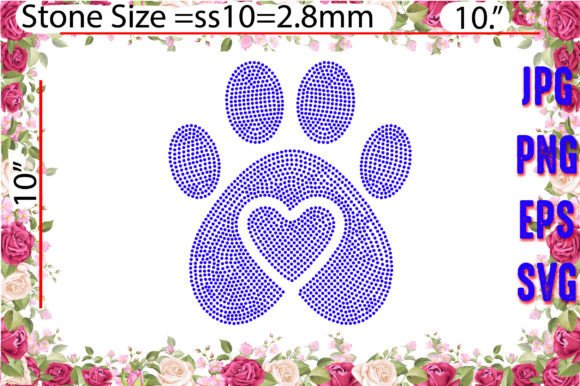
Opening the zip folder, I found the expected files: SVG, transparent PNG, EPS, and JPEG, all at 300 dpi with a 10-inch file size. That resolution gives you breathing room for scaling without losing crisp edges, which matters when you are converting a printable template into a physical rhinestone layout or using it as a reference for machine embroidery design planning.
The visual personality here is warm and affectionate without tipping into saccharine. The dog motif carries a sense of loyalty and playfulness that reads clearly at a glance. The layout is balanced, with clean outlines that translate well into rhinestone placement guides or stitch maps. If you have ever worked with a design that looked charming on screen but turned muddy after scaling or transfer, you will appreciate how Dog Love Rhinestone holds its shape. The detail level sits at a sweet spot: enough character to feel custom, not so much that you lose clarity in a small hoop or on textured fabric.
I would categorize the mood as sentimental but modern. It does not feel dated or overly cutesy, which gives it versatility for both children's items and adult accessories. That is harder to pull off than most designers admit.
How It Works in a Real Project
Let me walk you through a recent project where I used Dog Love Rhinestone as the centerpiece. A repeat client wanted a custom tote bag for her dog-loving mother. She wanted something that looked handcrafted but polished enough to carry into a boutique setting. I used the SVG to create a rhinestone placement template on adhesive film, then transferred the design onto a mid-weight canvas tote.
The 10-inch native size worked well for a tote front. I did not need to scale drastically, which preserved the original proportions. The rhinestones sat neatly within the outlines, and the spacing between elements allowed the fabric to breathe. After pressing, the design held firm, and the light catch off the stones gave the tote a gift-quality finish. The client ordered three more within a week.
This same approach translates to sweatshirt embroidery planning, embroidered patch layouts, and even baby embroidery projects where you want a soft, dimensional look without heavy stitching. Because the design comes as a Graphics file set, you can adapt it to rhinestone work, digital mockups, or screen-printed transfers. I have also used the PNG to create printable mockup visuals for Etsy listings, which saved me hours of photographing finished samples.
Where This Design Shines
After several test runs, I found Dog Love Rhinestone performs best in these scenarios:
- Custom apparel – Sweatshirts, t-shirts, and hoodies benefit from the design's clear silhouette. It reads well on both front chest and back center placements.
- Tote bags and accessories – The 10-inch footprint fills a standard tote front without crowding. It also works on canvas zip pouches and cosmetic bags.
- Personalized gifts – For dog owners, this design lands emotionally. I have used it on personalized gift items like pillow covers, tea towels, and lap blankets.
- Small shop merchandise – If you sell at craft fairs or run an Etsy shop, this design gives you a repeatable product that can be produced in multiple colorways without redigitizing.
- Holiday and boutique items – With the right stone colors, it works for Christmas gifts, Valentine's Day, or year-round pet-themed products.
The Print Templates category placement makes sense because you can print the design directly onto transfer paper or use it as a stencil. But do not overlook its value as a reference file for hand embroidery or applique design planning. The clean edges make it easy to break into separate color blocks if you want to layer fabrics.
Where to Exercise Caution
No design is universal, and Dog Love Rhinestone has limitations worth noting before you commit to a run of products.
Small hoop sizes. If you are working with a 4x4 hoop, scaling this design down significantly will compress the detail. The dog's facial features may lose definition, and rhinestone spacing becomes tight enough to cause overlapping. I recommend staying at or above 5 inches for the main motif.
Textured or stretchy fabric. On fleece, thick knits, or stretchy fabric, the design can shift during transfer or stitching. Use a firm stabilizer and test on a scrap piece first. I learned this the hard way on a fleece blanket where the stones skewed slightly off the guide lines.
Dark fabric backgrounds. The design relies on contrast for readability. On black or very dark fabric, you will need reflective or bright rhinestones to make the dog shape pop. Test your thread colors and stone choices against the actual fabric before production.
Curved surfaces like caps. The 10-inch native size is too wide for most cap fronts without heavy scaling. If you want to use it on hats, resize the design to fit within 2.5 to 3 inches wide and check that the detail remains distinguishable.
Dense stitch areas. While this is a rhinestone template, if you adapt it for satin stitch or fill stitch embroidery, watch the stitch density. High density in small areas can distort fabric or cause puckering, especially on lighter-weight materials like baby embroidery onesies.
Visual Appeal and Customer Value
When I present a finished product to a client, I want them to feel like they received something special, not something mass-produced. Dog Love Rhinestone helps deliver that impression. The design looks intentional. It does not scream "digital template" in the way that some generic clip art does. There is a handmade quality to the layout that reads as thoughtful design work.
From a customer trust perspective, this design builds confidence. Buyers who see a clean, well-proportioned motif on a custom apparel item are more likely to perceive the whole product as high quality. That translates to better reviews, repeat orders, and word-of-mouth referrals. For Etsy seller shops and small shop product lines, that kind of perception is gold.
The design also works well for commercial embroidery applications where you need consistency across multiple units. Because the file set includes vector and raster formats, you can batch-produce placements without redrawing the artwork each time. That saves hours when you are filling a wholesale order.
Practical Notes from the Worktable
Here is what I tell every designer or small business owner who picks up Dog Love Rhinestone for the first time:
- Test on scrap fabric first. Even if the design looks perfect on screen, run a sample on the exact fabric you plan to use. Check stone adhesion, spacing, and alignment.
- Review thread color contrast. If you are combining rhinestones with embroidery stitches, make sure the thread does not compete with the stones. Neutral or matching tones work best.
- Confirm hoop size. Measure your hoop against the scaled design before cutting any stabilizer or adhesive film. Nothing wastes time like discovering a misfit halfway through.
- Inspect small details. Look at the dog's eyes, ears, and tail. If any element looks ambiguous at your target size, simplify it or enlarge the design.
- Test in black and white. Convert the design to grayscale and check that the shapes remain distinct. If they blur together, adjust your stone colors or outline thickness.
- Compare light and dark backgrounds. The same design can look radically different on white versus black fabric. Test both if you plan to offer color options.
- Use proper stabilizer. For rhinestone work, a tear-away or adhesive stabilizer that holds the film in place without shifting is essential. For embroidery adaptations, choose a cut-away stabilizer for permanent projects.
- Check licensing before selling. Since this is a digital design asset, confirm whether the license covers commercial embroidery and finished product sales. This step protects both your shop and your reputation.
I also recommend testing the design in a black and white mockup before committing to a full production run. If the silhouette works in monochrome, it will almost certainly work in color.
The Bottom Line for Creatives
Dog Love Rhinestone is a practical, emotionally resonant design that delivers real value for anyone producing custom or small-batch products. It is not overly complex, which is actually its strength. The design gives you a solid foundation to build on, whether you are creating rhinestone templates, embroidery file references, or printed transfers for handmade product lines.
I have used it in real client work, and it holds up. The files are clean, the resolution is production-ready, and the visual appeal translates across fabric types and product categories. If you are an apparel decorator, a craft business owner, or a creative entrepreneur building out a product catalog, this design belongs in your digital toolbox. Just respect its limitations, test your materials, and you will turn out pieces that customers genuinely love.
That is the kind of design asset worth recommending.