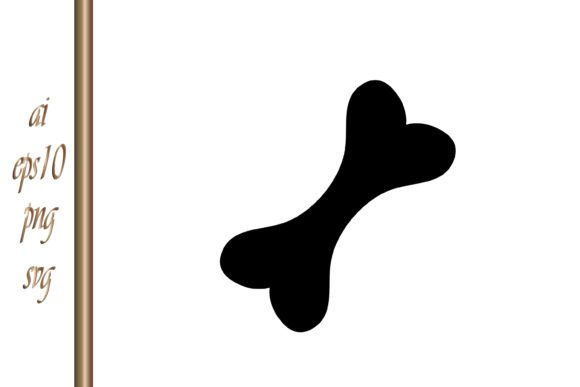
Doodle Silhouette Dog Bone Icon Vector
A few weeks ago, a client asked me to create a custom tote bag for her dog grooming business. She wanted something clean, playful, and instantly recognizable—a simple icon that would work on both her staff aprons and the retail totes she sells at her shop. I pulled up a few references, and that’s when I came across the Doodle Silhouette Dog Bone Icon Vector. At first glance, it looks like a straightforward bone silhouette with a hand-drawn, slightly irregular edge—what I’d call a “doodle” style that adds warmth without losing clarity. As an embroidery designer who has stitched thousands of small icons, I know that simplicity often translates better than complexity when you’re working with thread. This design sits right in that sweet spot.
First Impressions: A Silhouette with Character
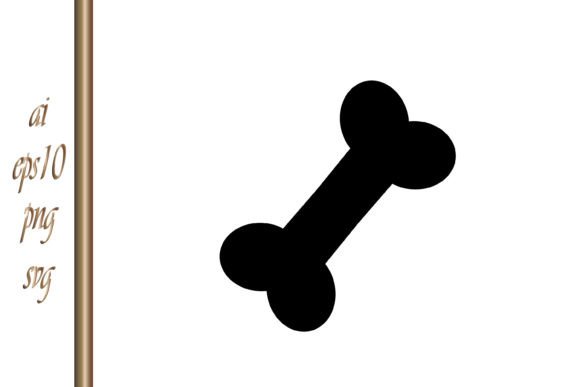
The Doodle Silhouette Dog Bone Icon Vector has a loose, sketch-like outline that gives it personality. It’s not a rigid, perfectly symmetrical bone—the edges have tiny waves and uneven curves that make it feel hand-drawn. That’s important for embroidery because it masks small registration imperfections and makes the final stitch look organic rather than cold and digital. The shape itself is the classic bone silhouette, but the doodle treatment makes it feel current and casual. It reminds me of something you’d see on a modern pet boutique label or a dog park sign.
Because it’s a silhouette, there’s no internal detail, no tiny holes or fine lines to lose in the fabric. That means it can work at a small scale without becoming a blob. I immediately thought of using it for a left chest logo on a sweatshirt, a center design on a baby onesie, or a repeating pattern on a tea towel. The mood is friendly, unpretentious, and universally appealing to dog lovers. It doesn’t try to be clever—it just is.
Real-World Embroidery Performance Across Products
I put the Doodle Silhouette Dog Bone Icon Vector through a series of mental tests based on years of running my own embroidery business. How does it behave on a cap? On a stretchy performance fabric? On a thick fleece blanket? Here’s what I found.
On Custom Apparel and Ready-to-Wear
For a sweatshirt or t-shirt, this design shines as a single-color satin stitch. The doodle outline can be digitized as a running stitch for a sketch-like effect, or as a fill stitch for a solid silhouette. Because the lines are slightly uneven, a satin stitch with a moderate density will still capture that hand-drawn feel. On a tote bag, it works beautifully as a statement piece—maybe 4 inches wide centered on the front. The silhouette shape is easy to resize without distortion. I’d recommend a cutaway stabilizer for knit fabrics and a tearaway for wovens. Test it first on a scrap to ensure the stitch direction doesn’t create pull on the edges.
For baby items like onesies or burp cloths, the design is safe because there are no sharp points or tiny loops that might snag. The doodle style is soft enough for a baby gift embroidery project. Just be mindful of the size: keep it under 3 inches to fit the small hoop area on a onesie. Also, because the design is a solid shape, it will stitch relatively quickly—good for production work.
For Patches and Decorative Accents
This design is practically made for embroidered patches. The silhouette is easy to cut around if you’re using a heat-seal or sew-on patch blank. The irregular edge of the doodle line actually helps hide the patch border, giving it a custom, slightly distressed look. I can see it on a denim jacket, a dog collar, or even as a hat patch. Because there’s no fine detail, the patch can be made small—say 1.5 inches tall—and still read clearly. For a patch, I’d use a satin stitch border and fill stitch inside, or even a combination of running stitch outline and fill.
On Home Decor and Gifts
Pillow covers, kitchen towels, and nursery decor are natural fits. The Doodle Silhouette Dog Bone Icon Vector adds a playful touch without overwhelming the product. On a tea towel, place it low near the hem for a professional boutique look. On a pillow cover, consider a contrasting thread color on a neutral background. I once embroidered a set of dog bone silhouettes on a fleece blanket for a dog rescue auction, and the simple design allowed the fabric texture to show through. That’s the advantage of a silhouette—it doesn’t fight the fabric; it enhances the product.
Where to Use Caution: Small Hoops, Fine Fabrics, and Curved Surfaces
Every design has its limits. The Doodle Silhouette Dog Bone Icon Vector is forgiving, but there are a few scenarios where you need to test before committing.
- Small hoop sizes – If you try to stitch this design under 1 inch tall, the doodle irregularities may become too subtle or the stitches may bunch. I’d recommend a minimum width of about 1.5 inches to preserve the hand-drawn character.
- Fine or thin fabrics – On lightweight silks or thin cotton voile, a dense fill stitch might cause puckering. Use a lightweight stabilizer and reduce stitch density if possible.
- Stretchy fabric – On performance knits or spandex, the design may distort. A cutaway stabilizer is non-negotiable, and you may need to add a temporary spray adhesive to keep the fabric from shifting.
- Dark fabric – This silhouette works best with high thread contrast. On a black or navy background, choose a bright white, neon, or metallic thread. A dark-on-dark design will lose the doodle effect entirely.
- Curved surfaces like caps – The shape is simple enough to cap-hoop, but keep the design under 2 inches wide to avoid distorting on the curve. Also, consider turning the design so the bone is horizontal rather than vertical to align with the cap’s natural curve.
How This Design Boosts Product Value and Customer Trust
When a customer buys a handmade product with a clean, recognizable icon, they perceive higher quality. The Doodle Silhouette Dog Bone Icon Vector communicates that the maker paid attention to detail—it’s not a generic clipart bone but a thoughtfully drawn silhouette. For an Etsy seller or a craft business, this design can be the difference between a product that sits in inventory and one that sells quickly. It works for personalized gifts like a dog-themed tote for a friend’s birthday or a custom sweatshirt for a pet rescue event.
The doodle style also bridges age groups. It appeals to children (think dog bone on a kid’s apron) and adults (minimalist home decor). Because it’s a vector file, you can adjust the size for different products—from small patches to large blanket appliqués—without losing resolution. That scalability is a huge advantage for a shop owner who produces multiple product lines.
Moreover, this design can serve as a branding element. A dog groomer or pet store could use the same bone silhouette across uniforms, tote bags, and promotional merchandise to reinforce brand recognition. Consistency builds trust, and a simple silhouette is easy to reproduce.
Practical Designer Notes Before You Stitch
Before you load your machine, take these steps to ensure the best result with the Doodle Silhouette Dog Bone Icon Vector.
- Test on scrap fabric first. Use the actual fabric you plan to stitch on, with the same stabilizer and thread. This test run will reveal any tension issues, density problems, or size adjustments needed.
- Check thread color contrast. Hold your thread next to the fabric. If you can’t easily see the silhouette, choose a lighter or darker thread. For a subtle look, try a tone-on-tone effect.
- Review stitch density. Since this is a silhouette design, the fill density will determine how solid the shape looks. Too loose and it will look threadbare; too dense and the fabric may pucker. Ask your digitizer for a medium density.
- Confirm hoop size. The design can be scaled, but make sure your hoop can accommodate the final dimensions with at least half an inch of margin on all sides.
- Inspect small details. The doodle lines are intentionally uneven. Zoom in on the vector file to ensure no path has tiny loops that could cause stitch breaks. If you see any, simplify before digitizing.
- Test in black and white mockups. A simple silhouette often looks best in one solid color. Print a black-and-white mockup at the intended stitching size to see if the shape reads clearly.
- Compare light and dark fabric backgrounds. The same design will look different on a white versus black background. If you’re producing for multiple colors, digitize with a underlay to prevent show-through.
- Use proper stabilizer. For most medium-weight fabrics, a cutaway stabilizer works best. For patches, use a heavy tearaway. Always test.
- Check licensing before selling finished items. The product description states “Downloadable digital produ” and includes AI, SVG, EPS, and PNG files. This appears to be a graphics file set, not an embroidery file format. You may need to convert the vector to a machine embroidery file using digitizing software, or have a digitizer create the embroidery file for you. Always confirm that your license allows commercial use of digitized versions. If you plan to sell the finished embroidery, check the terms of the original artwork. When in doubt, contact the seller.
Keep in mind that the provided files are vector and raster graphics, not native embroidery formats like PES, DST, or EXP. That’s actually an advantage because you can customize the design in your preferred graphic software before digitizing. The high-resolution PNG on transparent background is perfect for printable mockups for your Etsy listings or craft fair displays.
Final Thoughts on a Versatile Silhouette
The Doodle Silhouette Dog Bone Icon Vector is the kind of design that makes embroidery work easier. It’s simple enough for beginners but has enough character to satisfy experienced embroiderers. Whether you’re stitching a custom onesie for a new puppy owner, a set of patches for a dog walking business, or a branded tote for a pet boutique, this design delivers a friendly, professional result. My recommendation: download the files, test a small stitch-out, and see how the doodle lines translate into thread. I think you’ll find it a reliable asset for your craft business or personal projects.