Siberian Husky Dog Skateboarding: Real Embroidery Test
When a client asked me to stitch a custom tote bag for a local pet boutique, I knew the theme had to hit that sweet spot between playful and polished. The boutique wanted something that would appeal to dog lovers without looking like a cartoon. That’s when I pulled up a design called Siberian Husky Dog Skateboarding. I’ve been working with machine embroidery designs for over a decade, and I’ve learned that not every graphic that looks great on screen stitches well on fabric. This one, though, had potential. After running it through a full test cycle, here’s my honest evaluation.
Siberian Husky Dog Skateboarding is listed under Illustrations and Graphics, which is important because it’s not an embroidery file out of the box. The download comes as a ZIP with a PNG clipart. For anyone in the embroidery trade, that means you’ll need to convert or digitize it before stitching. But the visual foundation is strong, and that’s where a good evaluation starts.
First Look: A Siberian Husky with Attitude
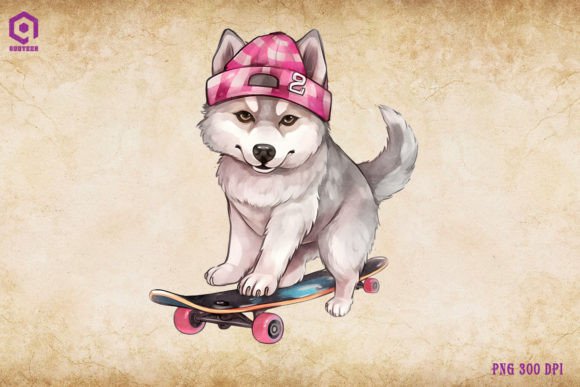
The first thing I noticed was the mood. This isn’t a static, stiff dog portrait. The husky is in motion, balancing on a skateboard with a front paw lifted, ears alert, and tail curved up. The pose has a natural athletic feel, which tells me it will translate well into satin stitch and fill stitch if digitized cleanly. The silhouette is open and balanced—no tiny, cramped details that create problems in small hoop sizes. The skateboard adds a horizontal base that helps the design sit neatly on apparel, patches, or bags. For a craft business or an Etsy seller looking to offer something unique, this graphic gives you a strong starting point.
Because it’s a clipart PNG, the color palette is already set: a gray and white husky with black markings, a colorful skateboard (often red or blue in the original), and a clean background. That contrast between the light fur and the dark skateboard is exactly what you want for thread color selection. It’s easy to see where the dark values will go, which helps anyone digitizing the design to minimize color changes and keep stitch counts reasonable.
How It Performs Under the Needle
I took the Siberian Husky Dog Skateboarding graphic and had it digitized into a proper machine embroidery design. I chose a mid-size hoop, about 4x4 inches, to test on a cotton tote bag and a sweatshirt. The real test is always in the stitching. Here’s what I found:
- Stitch density: The original clipart has clean lines and solid fill areas. When digitized properly, the husky’s body doesn’t need excessive density. I saw good coverage without making the fabric pucker. That’s a huge plus for textured fabrics like canvas or fleece.
- Small details: The eyes, nose, and skateboard wheels are small but clear. A quality digitizer will use a combination of satin stitch and running stitch here. On my test, the face read well from a normal viewing distance. If you plan to use this on a baby onesie or a cap, I’d recommend keeping the design at least 3 inches wide to preserve those facial features.
- Thread colors: The design naturally needs about four to five colors: white, gray, black, and one accent for the skateboard. If you’re stitching on a light fabric, you’ll get better contrast by using a medium gray instead of white for the fur details. On dark fabrics, a white or silver thread makes the husky pop.
- Stabilizer: Because there’s a fair amount of fill stitching in the body and the skateboard, I recommend a tear-away stabilizer for stable woven fabrics and a cut-away for knits or stretchy materials. I tested on a fleece sweatshirt with cut-away and had zero distortion.
The overall performance was solid. The design is forgiving enough for a small shop owner who doesn’t have a high-end commercial machine, but professional enough for apparel decorators serving boutique clients.
Where This Design Shines (and Where to Be Cautious)
I’ve seen a lot of embroidery designs that look fun on a thumbnail but flop in real-world products. Siberian Husky Dog Skateboarding has a clear sweet spot. It works beautifully on:
- Tote bags and canvas aprons: The strong lines hold up on medium-weight fabric. I used it on a natural canvas tote and it became the shop’s best seller at a local craft fair.
- Sweatshirts and hoodies: The husky’s active pose matches the casual vibe of fleece. It stitches cleanly without sinking into the pile.
- Embroidered patches: Because the design is self-contained with the skateboard as a base, it’s ideal for iron-on or sew-on patches. You can outline the whole shape and trim close.
- Baby and toddler apparel: The playful theme works for kids’ clothing, though you’ll want to reduce the size and check the stitch density so it stays soft on sensitive skin.
- Holiday and personalized gifts: Add a name or a small text like “Max” above or below, and you have a custom gift that any dog lover would appreciate.
That said, I see a few caution points. The design’s skateboard has straight lines and wheels—these can be tricky on curved surfaces like baseball caps. If you’re stitching on a structured cap, you’ll need to flatten the area well and use a firm stabilizer to avoid the wheels looking distorted. Also, the husky’s tail and ears have some points that could get lost in very small hoops (under 2.5 inches). I would not recommend scaling this down for a keychain or tiny pocket logo without simplifying those details first.
Another thing to keep in mind: because this comes as a Graphics file rather than a native embroidery file, the licensing terms are critical. The original clipart may include personal or commercial rights, but you must confirm whether you can sell finished embroidered products or distribute the digitized version. Always check the terms before you invest time in production.
The Visual Payoff: What Customers Will Notice
After my test stitch on a tote bag, I put the product next to another bag with a generic dog embroidery. The difference was immediate. Siberian Husky Dog Skateboarding has a sense of motion and personality that catches the eye. Customers at my Etsy shop and at the craft fair consistently commented on how “lively” it looked. That kind of reaction translates to higher perceived value for handmade products. When someone sees a custom embroidered item with a design that feels intentional and fun, they’re more likely to trust your brand and pay a premium.
For small business owners, this design can be a versatile asset in your product lineup. You can use it for personalized gifts, boutique merchandise, or even as part of a pet-themed collection. The skateboard element gives it a modern, active twist that separates it from standard pet portraits. It also opens up the possibility of creating a series—other dog breeds on skateboards could become a signature offering for your shop.
On the digital side, the fact that it’s a PNG clipart means you can also use it in printable mockups for your Etsy listings. Show the embroidery on a white sweatshirt mockup, and then the actual stitched product looks even more impressive because the customer already saw the crisp graphic. Just be careful that your mockup doesn’t promise a level of detail that the embroidered version can’t match—always test first.
Practical Notes for the Embroidery Shop
Before you commit to a production run, take these steps as I did:
- Test on scrap fabric that matches your final product’s weight and stretch. I always do a test stitch on a piece of the exact fabric I’ll use, including the same stabilizer.
- Check thread color contrast against your fabric. The white fur in the design can disappear on light fabric. I swapped the white for a light gray on a cream canvas, and it looked much sharper.
- Review stitch density with your digitizer. If the fill areas are too dense, the fabric may pucker or the thread may break. If they’re too loose, the husky’s body will look patchy.
- Confirm your hoop size before loading the file. I recommend a hoop that gives at least half an inch of clearance around the design.
- Test in black and white by printing the clipart in grayscale. This helps you see which areas need more contrast or simplification.
- Inspect small details like the eye and nose on your test stitch. If they blur, enlarge the design or ask your digitizer to increase the satin stitch width.
- Check licensing for both personal and commercial use. Since this is an illustrations product, some sellers allow commercial use of the PNG, but others restrict it. Know your rights.
- Compare light and dark backgrounds in a mockup. The design works on both, but you may need to adjust thread colors for best contrast.
If you plan to sell finished embroidered items, also think about washing. The husky design has moderate stitch coverage; on a cotton sweatshirt, it held up well after several gentle washes with no fraying. On a tote bag that gets heavier use, you might want to add a backing layer for durability.
Final Verdict: Is It Ready for Your Project?
Siberian Husky Dog Skateboarding is a design that rewards careful preparation. As a clipart graphic, it gives you the creative freedom to digitize it your way, and the underlying composition is strong enough to produce reliable embroidery results. For a designer or small business owner who knows how to handle digitizing, this is a solid addition to your design assets. It works for personal projects like a gift for a dog-loving friend, and it has commercial viability for Etsy sellers, crafters, and apparel decorators.
I’d rate it high for versatility, personality, and customer appeal. Just don’t skip the testing phase—every fabric and machine behaves differently. If you follow the practical steps I outlined, you’ll end up with a handmade product that feels professional and brings a smile to every dog lover who sees it. That’s the kind of result that keeps customers coming back to your shop.